Every phone passes it on
A message hops across four or five phones to reach the far end of the cabin, and each phone remembers what it has already seen so the same message is never shown twice.
Design & build
AirFellow is what passengers on the same flight get when there is no internet: chat, games against each other, and a radar of who else on board is up for talking.
There is no server and no account. Messages travel phone to phone by short-range radio, the same way wireless headphones connect, and everything worth keeping is kept on your own phone.
That radio is the hard part. It is short-range, it drops, and a full cabin means dozens of phones all trying to talk at once — so most of the work went into the layer above it, making a message arrive once, reach the far end of the cabin, and not drown out everyone else on the way.
iPhone and Android, plus a separate website for the store listing, privacy and terms.
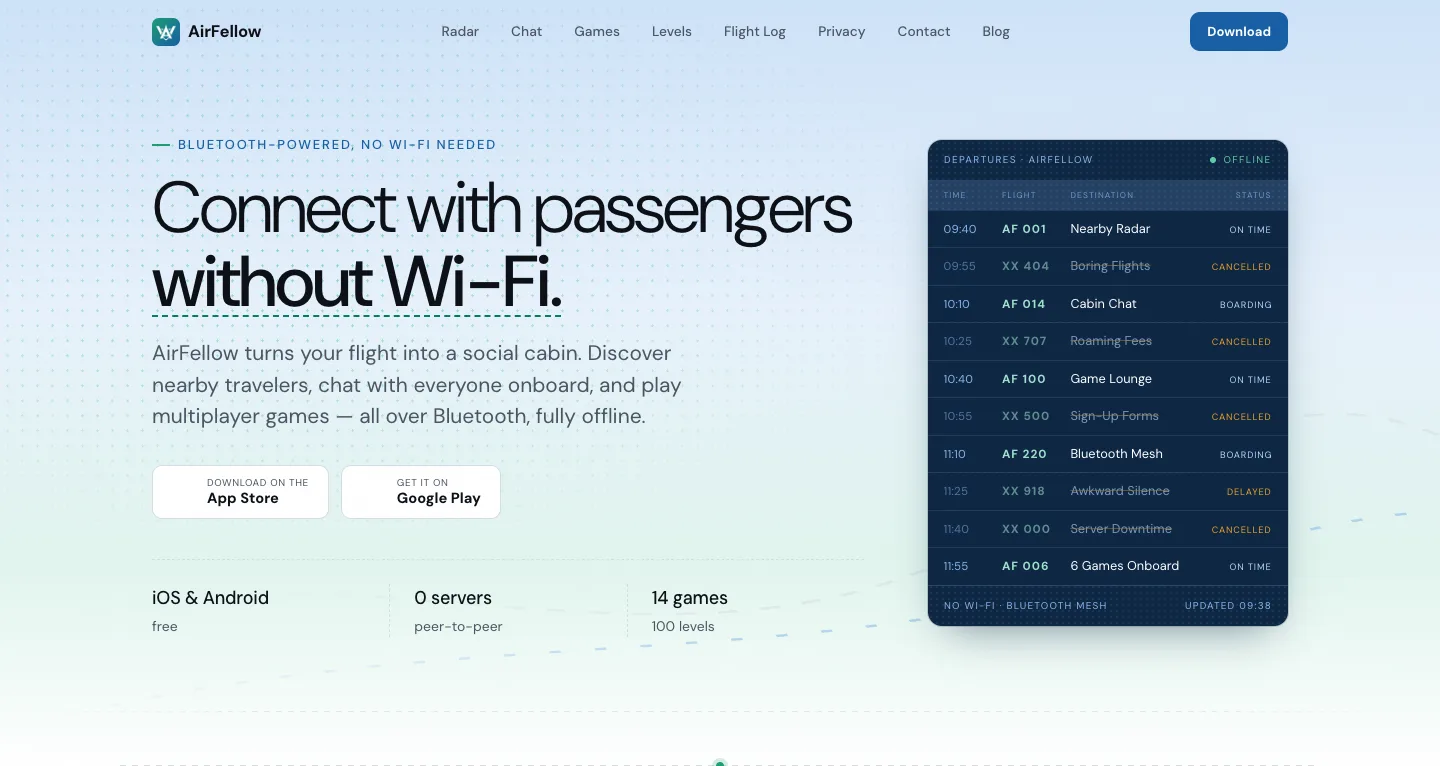
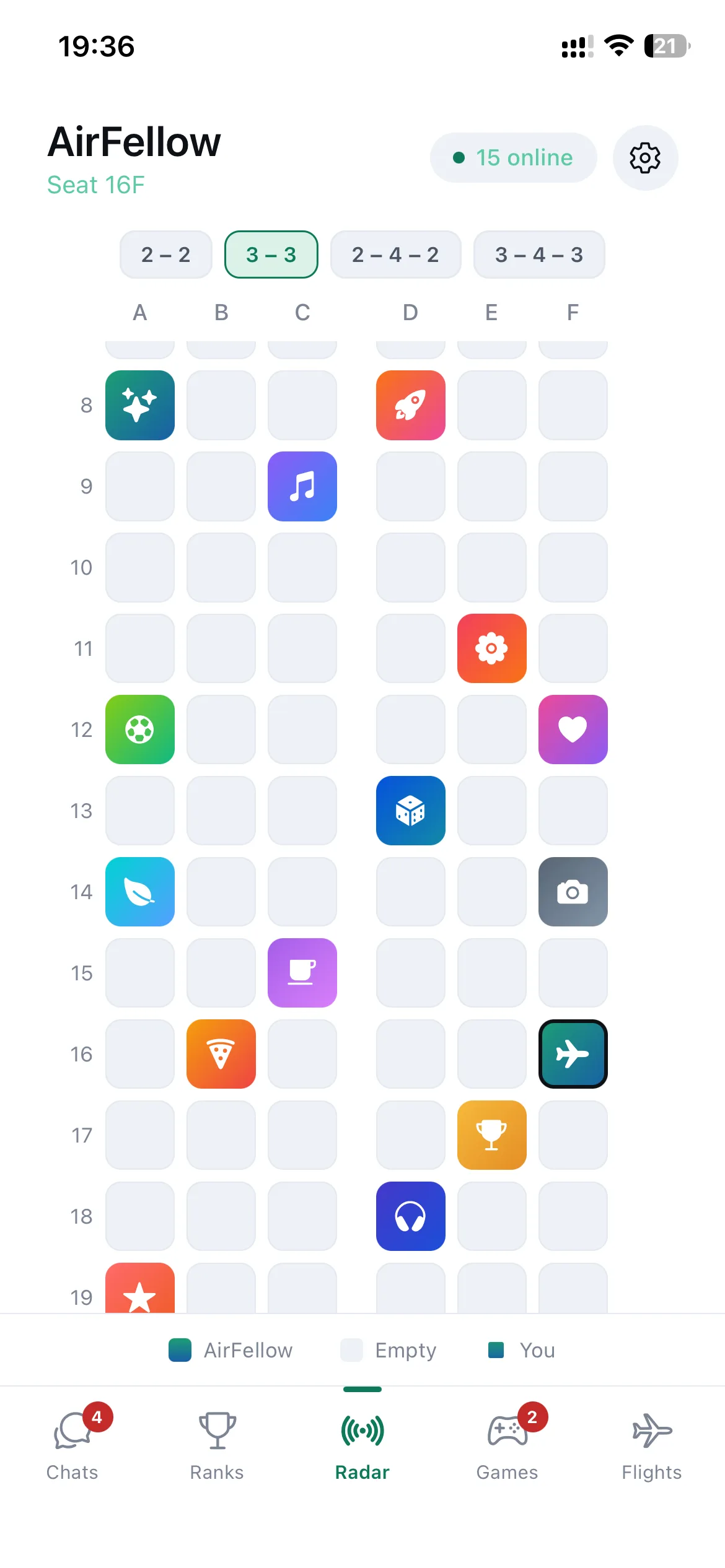
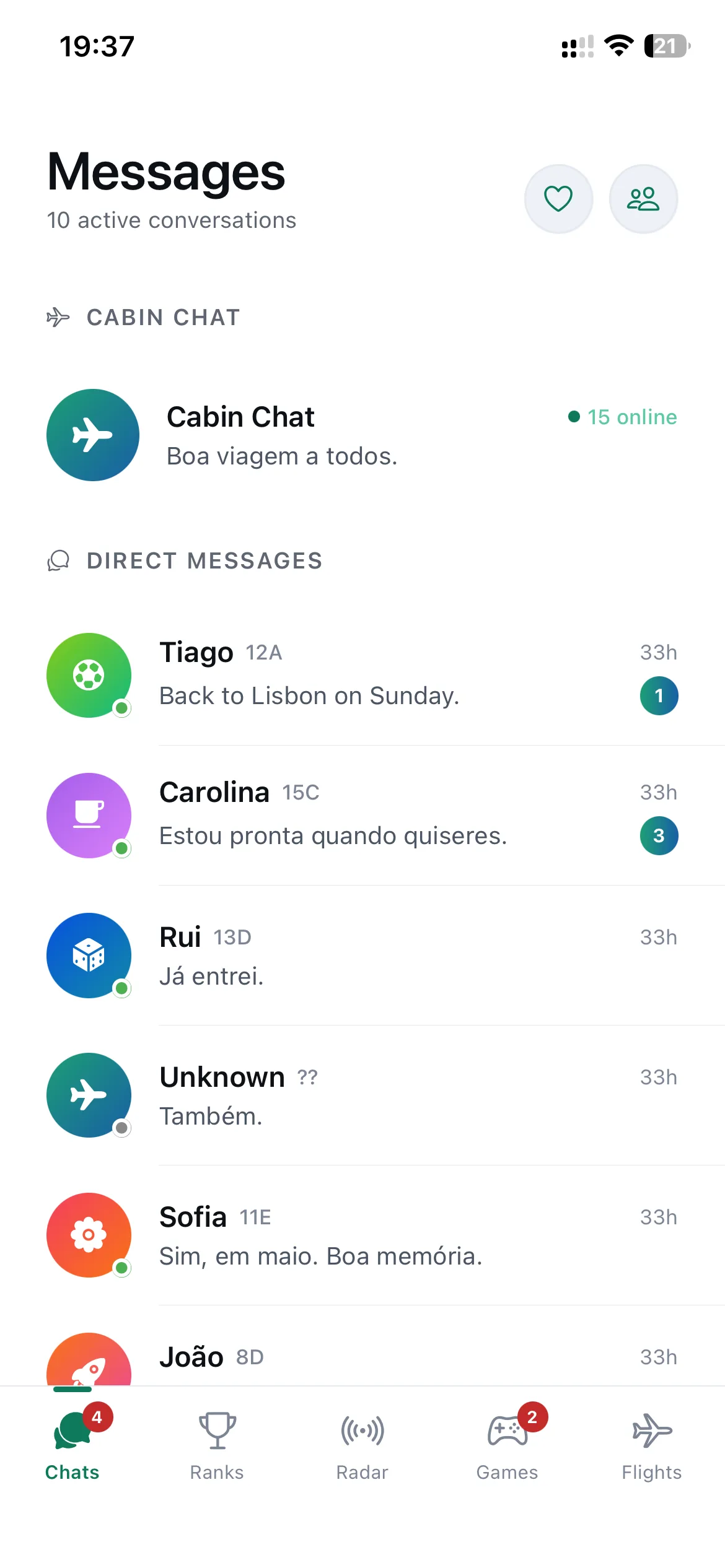
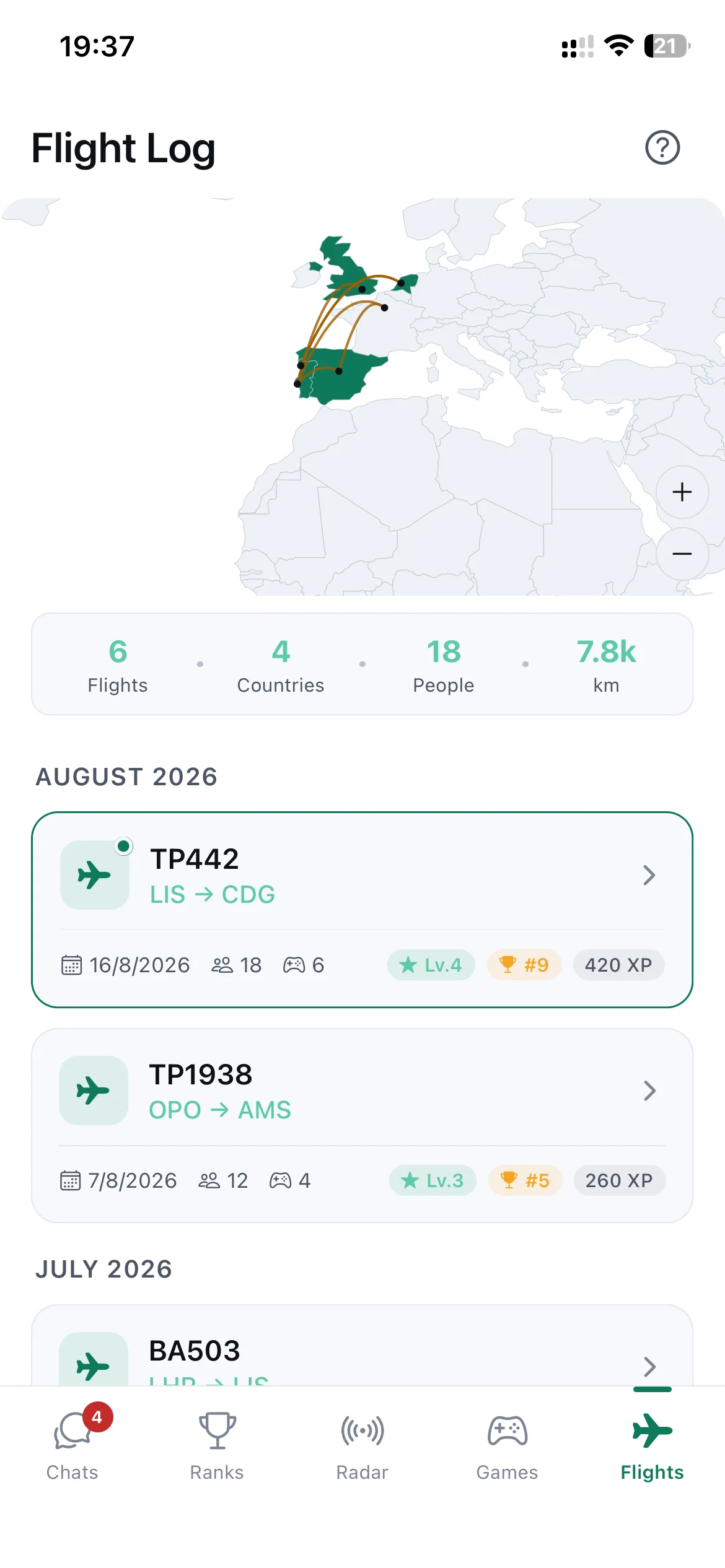
A message hops across four or five phones to reach the far end of the cabin, and each phone remembers what it has already seen so the same message is never shown twice.
Messages are bundled before they are sent, phones call out more or less often depending on how busy the cabin is, and each one only holds a handful of connections at a time.
Cabin-wide messages, private ones and groups, with typing dots, delivery ticks, replies and blocking. It all survives closing the app, with unread badges and notifications.
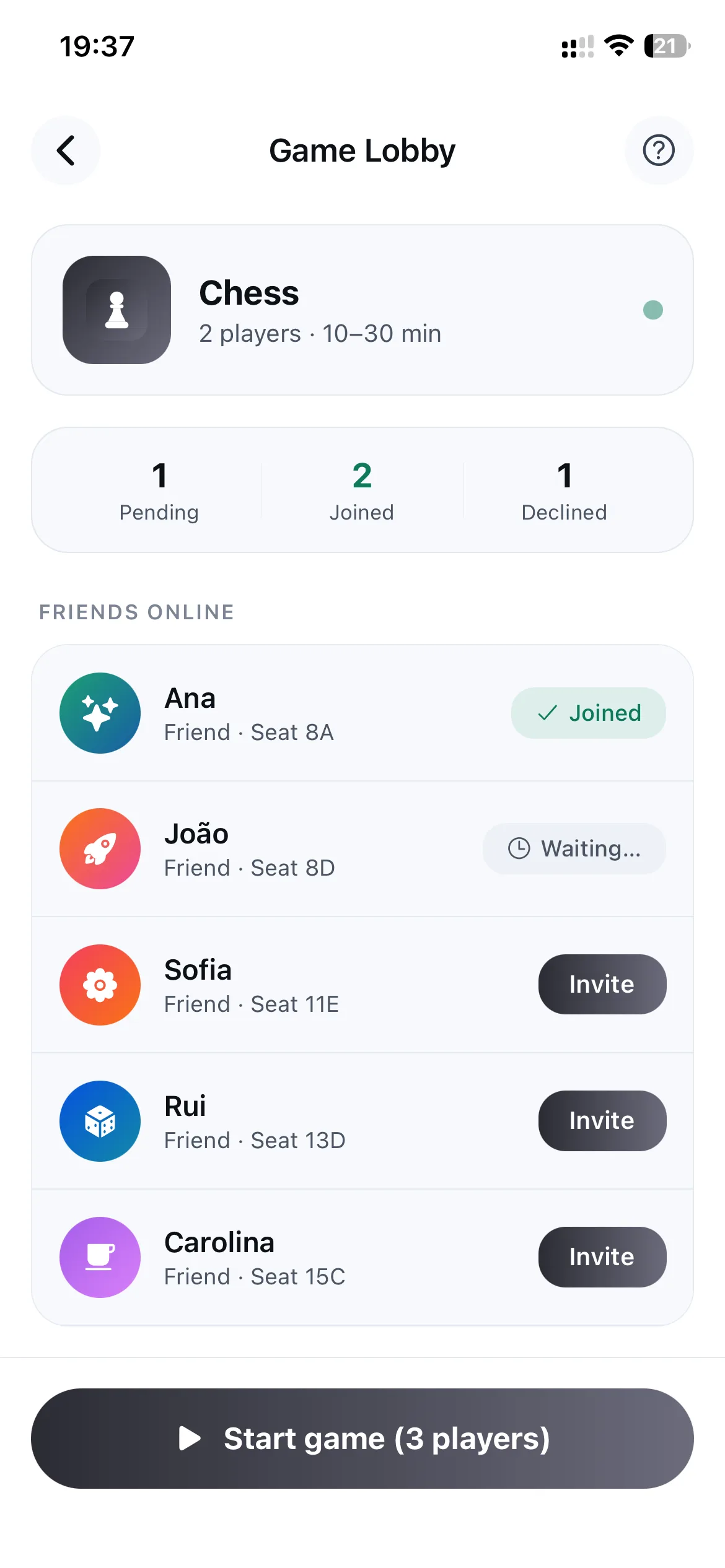
Invite, accept or decline, with both phones kept in step on every move and a way to join a game already in progress. Chess ships with an opponent built in at three levels.
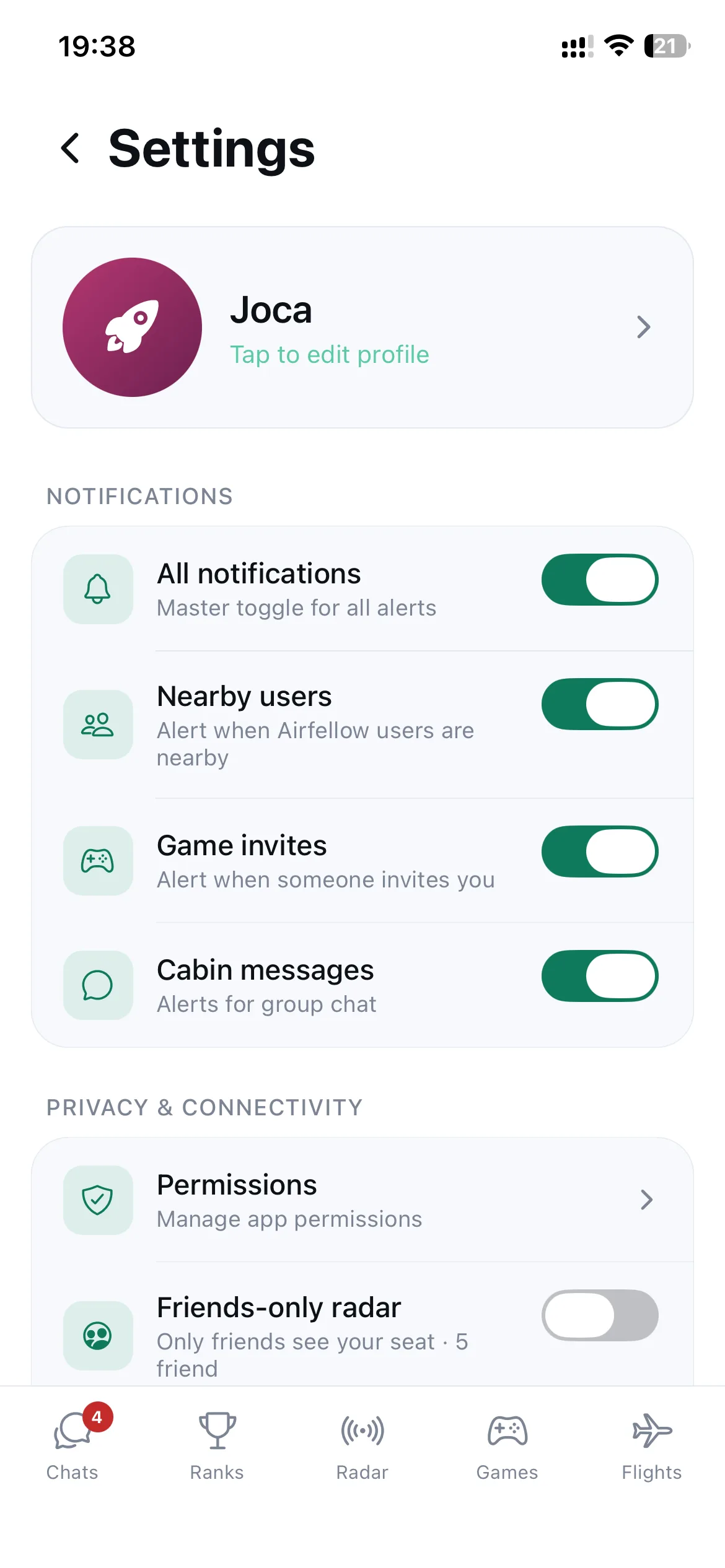
A PIN-protected lock over chat, private messages and games, an age check on the way in, a reporting queue, and the choice to send no usage data at all.
Pick the aircraft layout you are sitting in, watch a radar sweep of who is nearby, see a world map of flyers recently met, and keep a log of each trip.